These are my handcarved timber chopsticks made using a traditional Japanese smoothing plane (among other tools!), available in durable, beautiful Walnut or Jarrah. These are approximately 24cm long and the price is for one set, and includes a loved curved hashioki for the chopsticks to rest on.
The process of making chopsticks has appealed to me for a long time, and this year I bought a specialty planing jig from Japanese Tools Australia in order to have a go at making some. I very quickly realised there is a particular frame of mind required when working with this plane and jig that you need to tune into, in order to have a measure of success :) A calm and quiet mood, and a willingness to enter into a conversation (almost a dance) with the timber and the tools, which you can't force. You quickly realise whether it is the day for chopstick making or not! The process can be quite humbling, which is not a bad thing.
I start by roughing out blanks taking a large chunk of Walnut or Jarrah and cutting it into 1cm x 24cm lengths on the bandsaw. I give them a quick sand until they are 8mm all around, and then they go into the jig. The smoothing plane "kakuri" is then applied to all sides, working with the grain of the timber until they are shaped just so. This is a pull plane and creates the most incredibly beautiful timber curls (which I use when packaging your chopsticks). The smoothing plane eliminates the need to sand the chopsticks, giving a gorgeous knife finish.
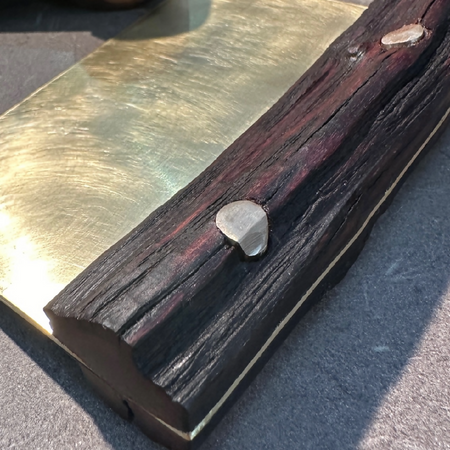
I then carve a lovely tiny bevel along each edge with a sharp knife, and then decide on the detail for the handle. I have carved designs into the end of the handles and have also embedded copper or brass for a tactile and earthy finish. See options currently available below.
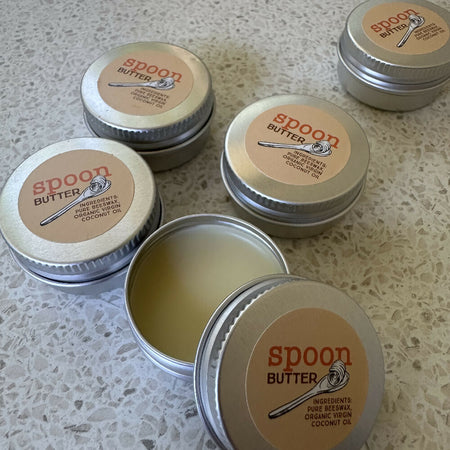
They are then finished with my spoon butter (a mix of organic coconut oil and pure beeswax) for lustre and protection.
Care for your chopsticks: Handwash with warm water and detergent when needed. Never place in the dishwasher. Dishwasher = sadness :( From time to time you can sand with a light grade sandpaper (for example 400 grit) to re-smooth, and re-oil using a food safe and non-oxidising oil (for example food grade mineral oil, grapeseed oil, coconut oil, or my spoon butter!).